architecture
Data and Search Architecture
Synkora separates durable product state from retrieval-oriented data. PostgreSQL is the system of record. Vector databases, search engines, Redis, and object storage support specific runtime jobs around retrieval, caching, and files.
Data and Search Architecture
Synkora separates durable product state from retrieval-oriented data. PostgreSQL is the system of record. Vector databases, search engines, Redis, and object storage support specific runtime jobs around retrieval, caching, and files.
Data Plane Diagram
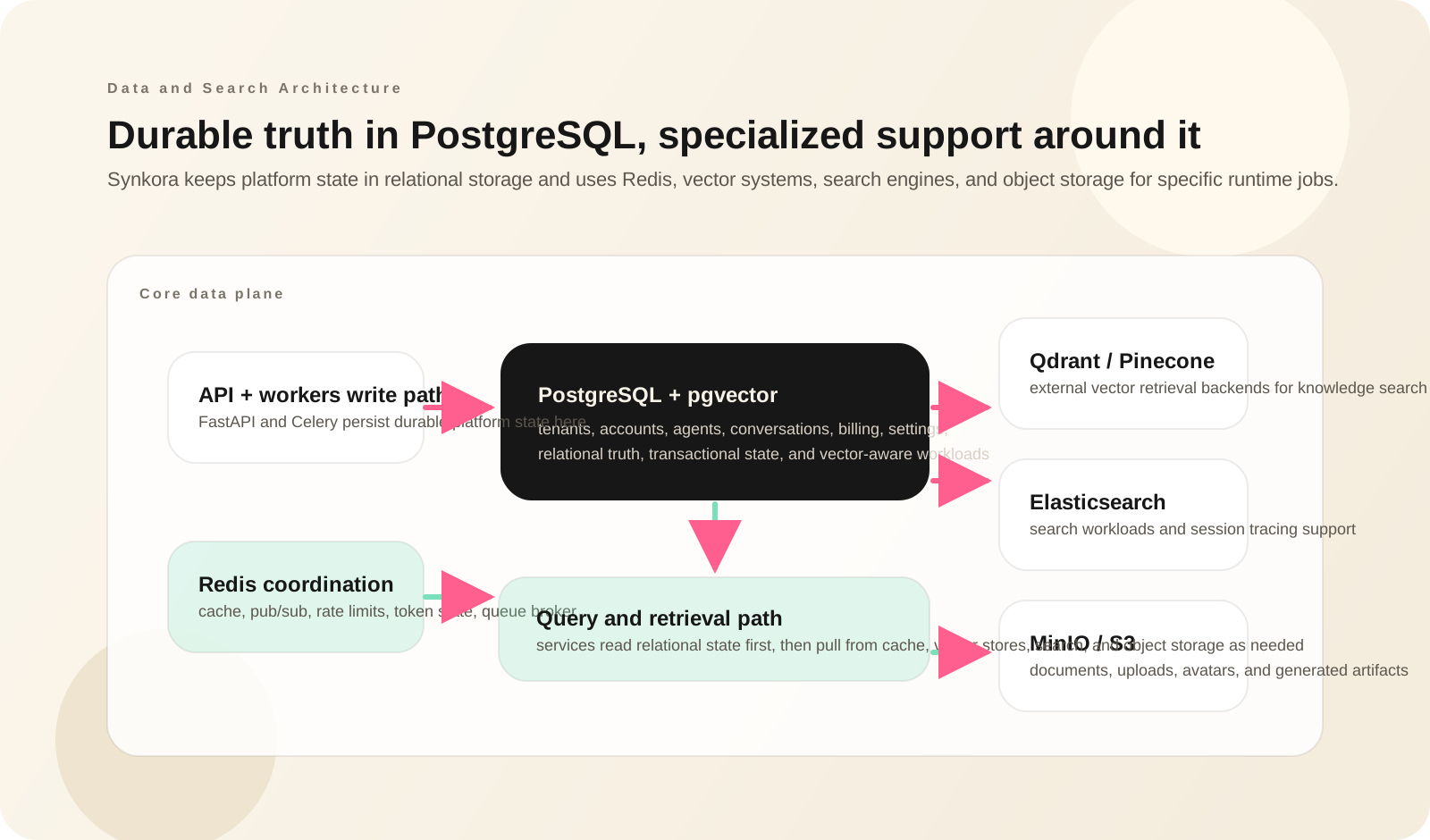
What Lives Where
| Store | Role in Synkora | Typical Data |
|---|---|---|
| PostgreSQL | System of record | tenants, accounts, agents, conversations, billing, integrations, settings |
PostgreSQL + pgvector | Relational data plus vector similarity | embeddings and vector search tied to relational records |
| Redis | Coordination and ephemeral runtime state | cache entries, pub/sub, rate-limit state, token state, Celery broker data |
| Elasticsearch | Search and analytics support | knowledge/search workloads, session tracing used by Lens-related flows |
| Qdrant / Pinecone | External vector retrieval backends | knowledge-base embeddings when those providers are selected |
| MinIO / S3 | Object storage | uploaded files, avatars, documents, generated assets |
Database Access Pattern
api/src/core/database.py sets up two access paths:
- a sync SQLAlchemy engine for sync workloads and legacy paths
- an async SQLAlchemy engine for FastAPI request handling
Important implementation details:
- SQLAlchemy 2 style configuration
- Alembic migrations for schema changes
asyncpgfor async database connectionspsycopg2for sync connectionsstatement_timeoutset to30s- pooled connections in normal environments
NullPoolin tests
Modeling Pattern
Most durable models inherit common mixins from api/src/models/base.py:
UUIDMixinTimestampMixinTenantMixinSoftDeleteMixinStatusMixin
That gives the platform a consistent baseline for:
- UUID primary keys
- audit timestamps
- tenant-scoped records
- soft deletion
- status tracking
Performance Patterns
The current backend architecture intentionally treats the relational layer as the durable truth and optimizes around that:
tenant_id,status, and key lookup columns are indexed- lazy loading is the default for many relationships
selectinloadandjoinedloadare used where relationship data is needed- async session factories are created lazily so they bind to the correct event loop
Practical Rule
Use PostgreSQL for truth, consistency, and multi-tenant state.
Use vector databases, search engines, Redis, and object storage as specialized supporting systems for:
- retrieval
- search
- performance
- file handling
That split keeps Synkora from turning the vector layer into the product database.