← Back to docs
architecture
Architecture Overview
Synkora is a full-stack monorepo. The same codebase contains the public site, docs, blog, dashboard, API, background workers, and supporting runtime services.
Architecture Overview
Synkora is a full-stack monorepo. The same codebase contains the public site, docs, blog, dashboard, API, background workers, and supporting runtime services.
At a high level, the platform splits into four operating planes:
- a frontend control plane in
web/ - an API and runtime plane in
api/ - an async execution plane built on Celery and dedicated bot workers
- a data plane built around PostgreSQL, Redis, object storage, and retrieval backends
Production Deployment HLD
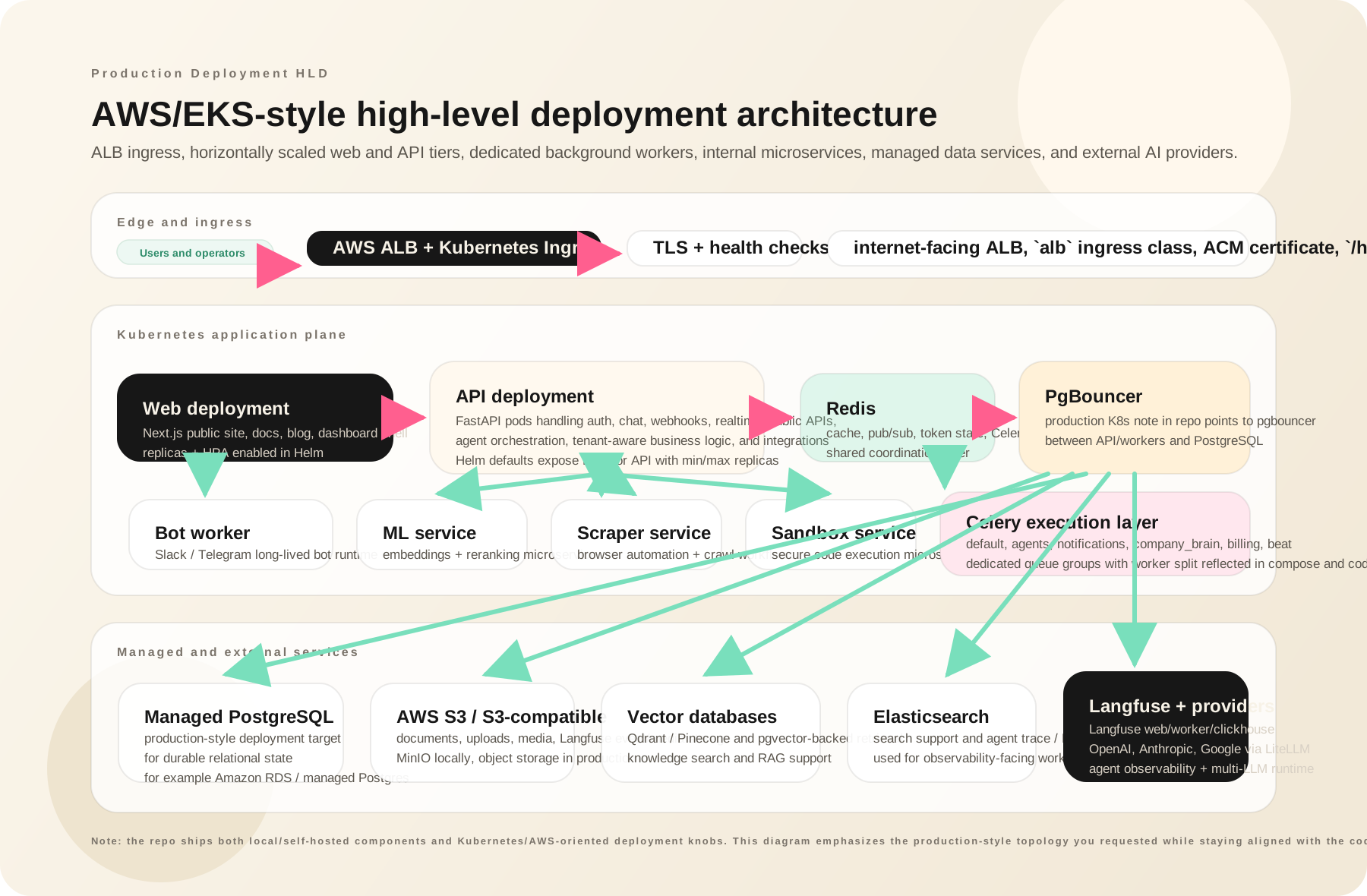
This view is the production-shaped diagram:
- AWS ALB-style ingress from the Helm chart
- horizontally scaled web and API tiers
- Redis as the shared coordination layer
- PgBouncer in front of PostgreSQL for the production Kubernetes path referenced in the repo
- dedicated Celery worker groups plus beat and bot worker
- internal
synkora-ml,synkora-scraper, andsynkora-sandboxservices - managed-style external services for PostgreSQL, S3-compatible object storage, vector databases, Elasticsearch, Langfuse, and multiple LLM providers
The repo also supports local/self-hosted equivalents for many of these services, but this is the higher-level production topology.
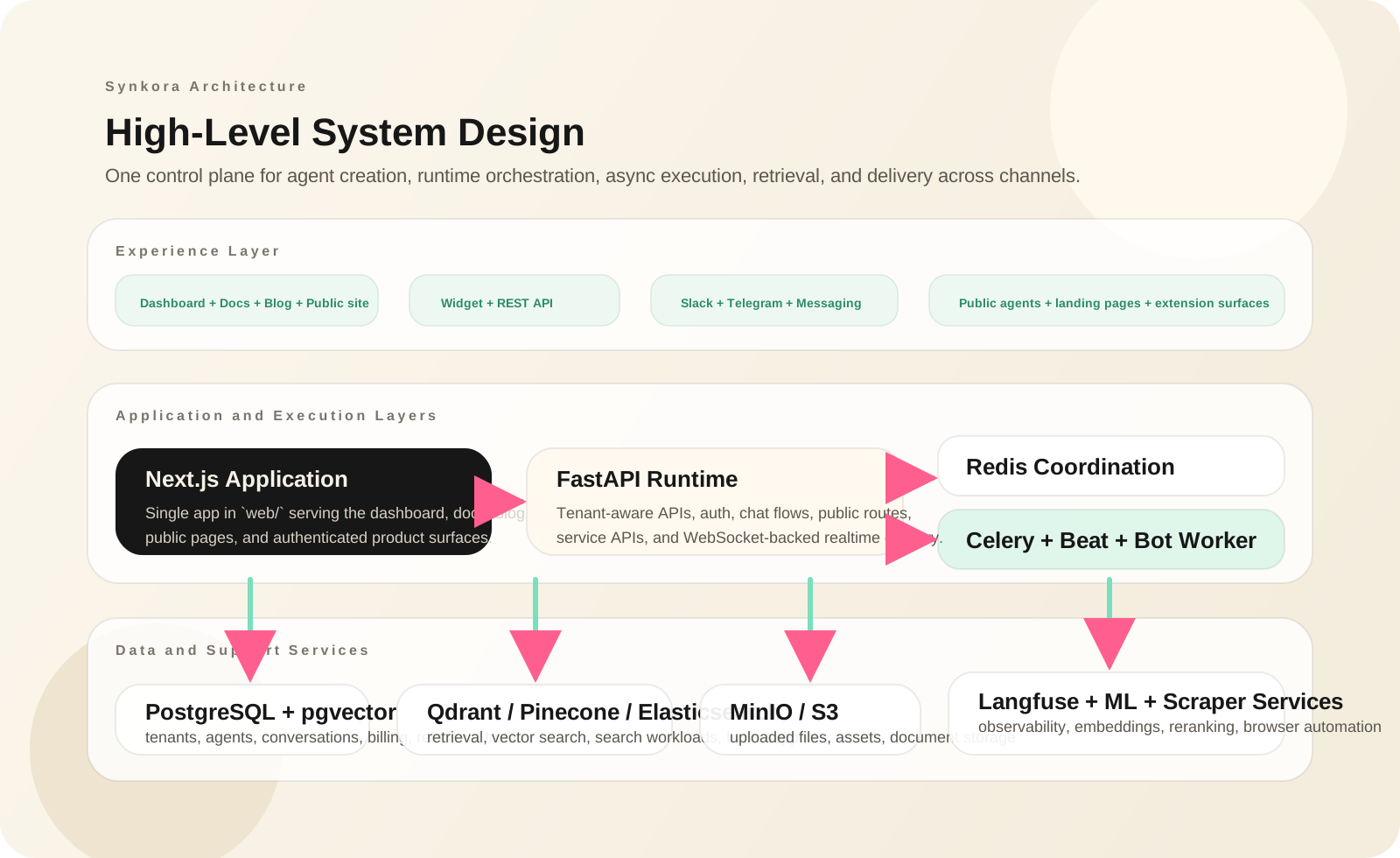
System Diagram
Major Runtime Components
| Layer | Implementation | Main Role |
|---|---|---|
| Frontend | Next.js app in web/ | Dashboard, public site, blog, docs, share pages, agent management UI |
| API | FastAPI app in api/src/app.py | Auth, agent APIs, chat flows, integrations, admin and public endpoints |
| Realtime | WebSocket manager in api/src/core/websocket.py | Streaming and cross-pod message delivery |
| Background work | Celery app in api/src/celery_app.py | Long-running jobs, ingestion, notifications, billing, scheduled work |
| Bot execution | api/src/bot_worker | Dedicated long-lived messaging bot workloads |
| System of record | PostgreSQL with pgvector | Tenants, users, agents, conversations, billing, configuration |
| Coordination | Redis | Cache, pub/sub, rate limiting, token revocation state, Celery broker |
| Retrieval and search | PostgreSQL pgvector, Qdrant, Pinecone, Elasticsearch | Knowledge retrieval and search workloads |
| File storage | MinIO or S3-compatible storage | Uploaded files, binary assets, document storage |
| Supporting services | Langfuse, synkora-ml, synkora-scraper | Observability, embeddings/reranking, scraping/browser automation |
Repo Shape
| Path | Purpose |
|---|---|
web/app | Next.js routes for auth, dashboard, docs, blog, and public pages |
web/components | Domain UI for agents, chat, widgets, billing, integrations, public site |
web/lib | API client, auth helpers, stores, types, shared utilities |
api/src/controllers | HTTP route handlers |
api/src/services | Business logic and integration orchestration |
api/src/models | SQLAlchemy models |
api/src/schemas | Pydantic request and response schemas |
api/src/tasks | Celery task modules |
services/ | Supporting runtime services such as ML and scraping |
Current Tech Stack
| Area | Current Stack |
|---|---|
| Frontend | Next 16.2.6, React 19, Tailwind CSS 3.4.14, Zustand, React Query, Axios, React Hook Form, Zod |
| Backend | Python >=3.11,<3.13, FastAPI, Uvicorn, Gunicorn, SQLAlchemy 2, Alembic, LiteLLM |
| Async and messaging | Celery, Redis, Flower, dedicated bot worker services |
| Data | PostgreSQL, pgvector, Redis, Elasticsearch, Qdrant, Pinecone |
| Integrations | OpenAI, Anthropic, Google GenAI, FastMCP, Slack, Telegram, Stripe, Firebase, ElevenLabs, SendGrid |
| Observability | Langfuse, Sentry, Prometheus metrics |
| Delivery | Docker Compose, Kubernetes, S3 or MinIO-compatible object storage |
How The Pieces Fit Together
- The Next.js app acts as the operator-facing control plane and also serves public product pages,
/blog, and/docs. - The FastAPI backend owns authenticated APIs, public APIs, chat runtime, and tenant-aware business logic.
- Redis coordinates rate limiting, caching, token state, Celery, and distributed WebSocket delivery.
- PostgreSQL stores the durable product state.
- Celery and bot workers handle slow or scheduled work outside the request path.
- Retrieval, storage, and observability services support knowledge-heavy and production workloads.
The rest of the architecture pages break these parts down in more detail.